
TL;DR:
- A daily spending habits checklist tracks every purchase to reveal where money goes and support smarter decisions. Batch logging weekly helps prevent burnout, and identifying leaks guides cost-saving actions. Setting limits based on real data and reviewing weekly improves financial discipline over time.
A daily spending habits checklist is a structured log that captures every purchase you make, reveals where your money actually goes, and gives you a clear basis for smarter daily decisions. Most people earning good incomes still feel financially stretched at month's end. The reason is almost never their salary. It's the invisible accumulation of small, frequent purchases that never get examined. This guide walks you through a practical financial habits checklist built around a simple weekly rhythm, realistic limits, and decisions you can act on today.
1. What belongs on your daily spending habits checklist
The core of any spending tracking template is a record of what you spent, when you spent it, and what category it falls into. You don't need a sophisticated system to start. A notes app, a printed log, or a basic Google Sheets template all work equally well in the beginning.

Your checklist should capture five things for every transaction: the date, the amount, the vendor or payee, the category, and a brief note on whether the purchase was planned or unplanned. That last field is the one most people skip. It's also the most revealing, because it separates intentional spending from reactive spending over time.
Categories should stay broad at first. Starting with 5–6 broad categories and adding detail later prevents the confusion that kills most tracking attempts early on. Good starting categories are: housing and utilities, food and groceries, transport, subscriptions, and flexible spending.
2. How to track daily spending without burning out
Sustainable tracking is batch tracking. Logging expenses weekly rather than in real time is more sustainable, with about 10 minutes per week sufficient to keep records accurate. Trying to log every coffee in the moment creates friction that most people abandon within two weeks.
Pick one day, Sunday evening works well, and spend 10 minutes reviewing your bank or card transactions from the past seven days. Enter them into your log by category. That's the entire system for the first month.
Pro Tip: Limit yourself to no more than six spending categories when you start. Every category you add is a decision you have to make for every transaction. Fewer categories mean less friction and a system you'll actually maintain.
Common small purchases worth tracking closely include:
- Daily coffee or tea runs
- Delivery fees and service charges on food orders
- Convenience store stops
- In-app purchases and digital downloads
- Parking and ride-share trips
These purchases feel trivial individually. Tracked weekly, they reveal patterns that are genuinely surprising to most people.
3. Identifying money leaks with a 7-day spending audit
A spending audit is a focused review of one full week of transactions, specifically designed to find spending that delivers little value relative to its cost. High-frequency, small-dollar purchases accumulate and damage budgets more than singular large ones. That's why the audit targets frequency, not just amount.
Run your audit by pulling every transaction from the past seven days and asking two questions about each one: Did I plan this? Did it deliver real value? Purchases that fail both questions are leaks.
Common money leaks include:
- Unused or barely used streaming and software subscriptions
- Daily coffee shop visits that could be replaced at home
- Delivery fees paid for convenience rather than necessity
- Duplicate services (two cloud storage plans, two music apps)
- Convenience purchases made because something wasn't prepared in advance
Once you've identified leaks, rank them by monthly impact. A $15 subscription you never open costs $180 per year. A daily $6 coffee costs over $2,000 per year. Prioritize by that annual number, not the daily one.
Add a "Next Action" column to your log for each leak you find. A "Next Action" column turns passive records into active tools, letting you assign one of four decisions to each item: pay, pause, cancel, or reduce. This single addition is what separates a spending log that changes behavior from one that just records history.
Pro Tip: When reviewing subscriptions, check your bank statements going back three months, not just one. Quarterly billing cycles hide charges that monthly reviews miss entirely.
4. Setting a realistic daily spending limit
A daily spending limit is the amount of flexible money you can spend each day without falling behind on your financial goals. The 50/30/20 rule, a widely used personal finance standard, allocates 50% of take-home pay to needs, 30% to wants, and 20% to savings and debt repayment. Your daily limit lives inside that 30% bucket.
Using real historical data rather than aspirational budgets prevents early burnout and helps build realistic spending limits. Pull two to three months of bank statements before setting any number. If your actual flexible spending averages $1,500 per month, setting a $500 monthly limit will fail. Start at $1,400, eliminate one or two leaks, and reduce from there.
The table below shows how eliminating common leaks affects your daily available budget.
| Monthly leak eliminated | Monthly savings | Daily budget increase |
|---|---|---|
| Two unused subscriptions | $30 | $1.00 |
| Daily coffee (5x per week) | $120 | $4.00 |
| Weekly food delivery fees | $60 | $2.00 |
| Duplicate streaming services | $20 | $0.67 |
Flexible weekly limits work better than strict daily limits for most people. If you underspend on Tuesday, that buffer carries into Wednesday. Weekly limits absorb normal variance without triggering the guilt that kills tracking habits.
Pro Tip: Apply the 24-hour rule to any non-essential purchase above your daily limit. Urgency almost always fades after one day, and the purchase either disappears from your list or feels more justified after reflection.
5. Making your weekly review count
A weekly review is where your spending log becomes a decision-making tool. Experts recommend a 15–30 minute, once-a-week review for effective financial management, while daily tracking should stay light to avoid burnout. That weekly session is where the real work happens.
Structure your review around four questions:
- What did I spend the most on this week, and was it planned?
- Which purchases delivered the least value relative to their cost?
- Did I hit any category that surprised me?
- What one change would have the biggest impact next week?
The goal is not judgment. The goal is adjustment. If you overspent on food delivery three weeks in a row, that's a pattern worth addressing. The fix might be meal prepping on Sundays, not eliminating delivery entirely.
Recovery steps when you overspend in a week are straightforward. Identify the single largest unplanned expense. Decide whether it was a one-time event or a recurring risk. If it's recurring, add it to your "Next Action" list. Then set a slightly lower flexible limit for the following week to rebalance. Small corrections made weekly prevent the large corrections that feel punishing at month's end.
A spending cycle review tied to your pay cycle, rather than the calendar month, often produces better results. Your spending patterns reset when money arrives, not on the first of the month.
Key takeaways
A daily spending habits checklist works because it turns invisible spending into visible patterns you can act on every week.
| Point | Details |
|---|---|
| Start with broad categories | Use 5–6 categories to reduce friction and build a habit you'll maintain. |
| Batch log weekly | Ten minutes once a week is more sustainable than real-time daily logging. |
| Audit for frequency, not just amount | Small, high-frequency purchases cause more budget damage than large one-time costs. |
| Use a "Next Action" column | Assign pay, pause, cancel, or reduce to every leak you find during your audit. |
| Set limits from real data | Pull two to three months of statements before setting any daily or weekly spending limit. |
What I've learned from treating tracking as a diagnostic tool
By Srini, Founder @ DivvyUpp
The biggest mistake I see people make with spending logs is treating them like a report card. They track for two weeks, feel bad about what they find, and quit. That's the wrong frame entirely.
A spending log is a diagnostic tool, not a grade. The point is to find surprises, not to confirm you're doing everything right. Spotting surprises gives you the easiest fixes, because forgotten charges and unexamined habits are low-hanging fruit. The first time I audited my own spending, I found three subscriptions I had completely forgotten about. That was $47 per month I recovered in about 20 minutes.
The other thing I'd push back on: don't aim for perfect daily tracking. Financial management habits succeed when you treat the process as a feedback loop, not a strict daily task. Miss a day? Fine. Catch it in your weekly review. The system should work around your life, not the other way around. Simplify your personal finance system until it fits in 10 minutes a week, and you'll actually stick with it.
— Srini / Founder @ DivvyUpp
DivvyUpp gives you a daily number, not a monthly lecture
Most budgeting tools ask you to build a plan, then tell you how badly you deviated from it after the month ends. DivvyUpp works differently. It shows you a single daily safe-to-spend number based on your real spending rate against the days left in your cycle, so you know before you spend whether a purchase is safe, risky, or worth the cost.
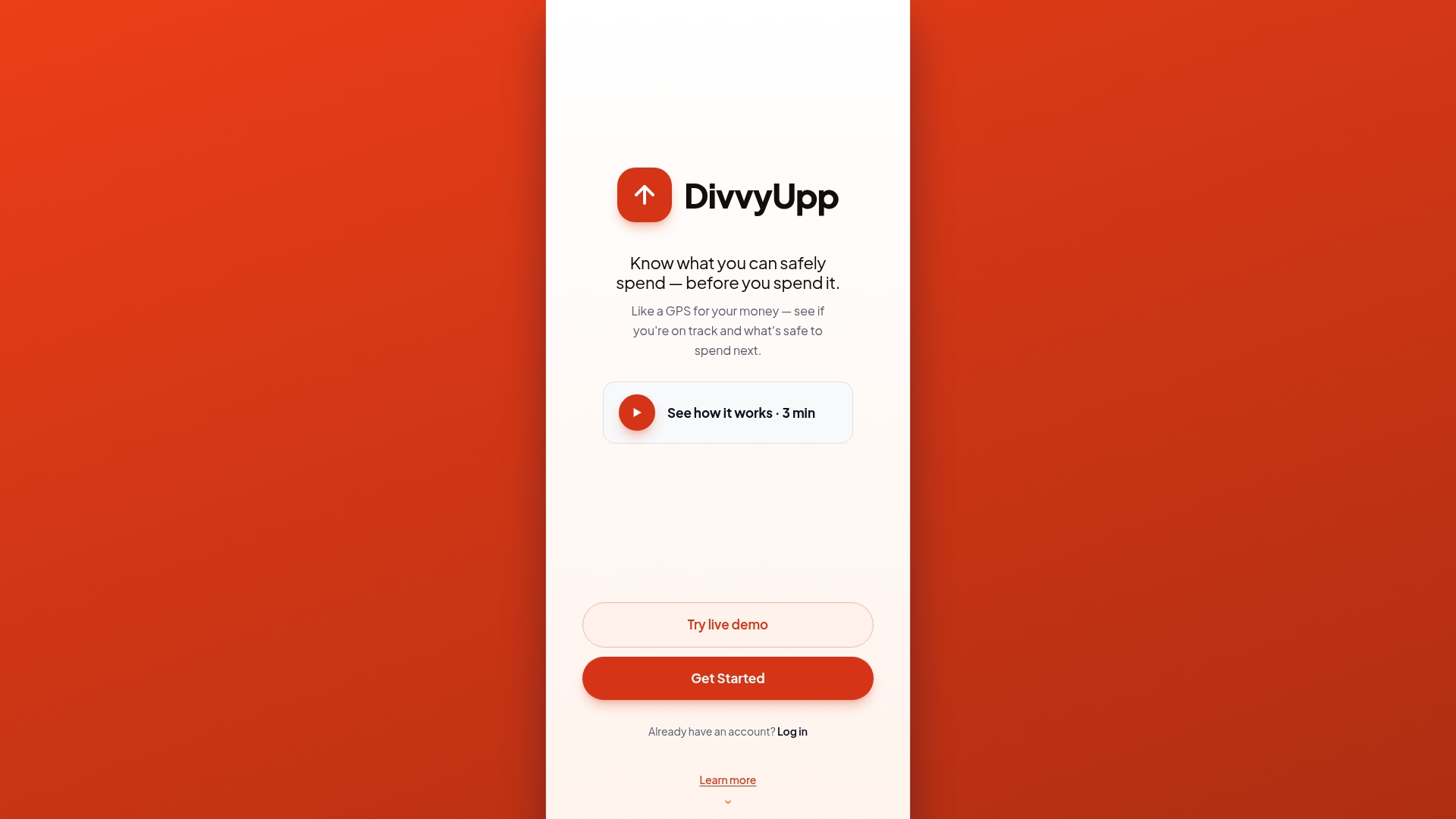
Your money stays in your own bank. DivvyUpp never moves funds. It just answers the question you're actually asking in the moment: "Can I afford this today?" If you're building a daily spending habit and want a number that updates in real time, try DivvyUpp free during beta at divvyupp.com.
FAQ
What is a daily spending habits checklist?
A daily spending habits checklist is a structured log that records every purchase by date, amount, category, and whether it was planned. It reveals spending patterns and helps you make better daily money decisions.
How often should I review my spending log?
A 15–30 minute weekly review is the recommended frequency for most people. Daily logging creates burnout; weekly batch review keeps the habit sustainable.
What are the most common money leaks to look for?
Unused subscriptions, daily coffee runs, food delivery fees, and duplicate digital services are the most frequent leaks. Ranking them by annual cost, not daily cost, shows their true budget impact.
How do I set a realistic daily spending limit?
Pull two to three months of actual bank statements and calculate your average flexible spending. Set your limit just below that average, then reduce it gradually as you eliminate leaks.
What is the 24-hour rule for spending?
The 24-hour rule means waiting one full day before completing any non-essential purchase above your daily limit. Impulse urgency fades within 24 hours for most purchases.
General information, not financial advice.