
TL;DR:
- Managing a spending cycle involves assigning every dollar a specific job before the month begins. Regular reviews and automation help prevent overspending due to unplanned expenses or category creep. This proactive approach improves financial discipline and reduces living paycheck to paycheck.
A spending cycle is defined as the recurring period, typically monthly, during which income arrives and gets allocated across expenses, savings, and debt payments. Spending cycle best practices center on one principle: assign every dollar a specific job before the month starts, leaving no money unallocated. 62% of Americans live paycheck to paycheck as of 2024, including many earning six figures. That statistic proves the problem is rarely income. It is almost always unplanned spending. The Bureau of Labor Statistics tracks 14 major household spending categories, from housing to education, giving you a ready-made structure to work with. DivvyUpp applies this same logic daily, showing you a single “safe-to-spend” number so you know exactly where you stand before you spend, not after.
1. Spending cycle best practices start with zero-based allocation
Zero-based budgeting is the foundation of every effective spending cycle. The rule is simple: income minus all assigned expenses, savings, and debt payments equals zero. No floating money remains. Unallocated money triggers overspending because your brain treats it as available, even when it is not.
Start by listing your take-home income for the month. Then assign every dollar to a category before the first bill hits. Fixed expenses go first, then savings and debt minimums, then variable spending. Whatever is left becomes your discretionary budget, and not a dollar more.

2. What is a household spending cycle, and why does it matter?
A household spending cycle is the monthly rhythm of income arriving, bills coming due, and discretionary money getting spent. Most people manage this reactively. They check their bank balance, spend what looks available, and discover the shortfall at month’s end.
The psychological shift from reactive to proactive money management is the single biggest lever you can pull. Deliberate planning and dollar assignment are what separate people who build wealth from people who earn well but stay broke. Proactive management means your spending decisions happen at the start of the cycle, not in the checkout line.
3. Common spending cycle pitfalls to avoid
Most spending failures follow predictable patterns. Recognizing them is the first step to breaking them.
-
Unassigned income. Money without a job gets spent on whatever feels urgent in the moment.
-
Ignoring periodic expenses. Annual insurance premiums, car registrations, and holiday gifts derail monthly budgets because people forget to plan for them.
-
No emergency fund. Without a buffer, any unexpected expense goes straight to a credit card. An emergency fund of about $1,000 covers most common surprises and breaks the debt spiral before it starts.
-
Lifestyle creep. High earners are especially vulnerable. A raise funds a nicer car, a bigger apartment, and more restaurant meals. The paycheck-to-paycheck pattern survives the income increase.
-
Reactive debt management. Paying only minimums while continuing to spend freely keeps the balance growing. The debt never shrinks.
Pro Tip: Before you spend a single dollar of a new paycheck, write down every obligation for the month. Seeing the full picture at once makes it much harder to rationalize impulse purchases.
4. How to classify household spending categories effectively
The Bureau of Labor Statistics framework tracks 14 major spending categories split into fixed and variable expenses. Fixed expenses stay the same every month. Variable expenses change based on behavior. Periodic expenses occur irregularly but are predictable if you plan ahead.
| Category type | Examples | Approximate share of budget |
|---|---|---|
| Fixed | Rent, mortgage, car payment, insurance | 50–60% |
| Variable | Groceries, gas, dining out, clothing | 20–30% |
| Periodic | Car registration, gifts, vacations | 5–10% |
| Savings and debt | Emergency fund, retirement, debt payoff | 10–20% |
A few classification rules prevent budget distortion:
-
Function over vendor. A Costco run that includes groceries and household supplies belongs in two categories. Split the receipt, or assign it to the dominant category.
-
Frequency over exceptions. If you buy coffee daily, it is a grocery or dining line item, not a miscellaneous expense.
-
Keep miscellaneous below 5%. Miscellaneous categories above 5% signal that your category structure is too loose. Tighten it.
Consistent categories matter more than perfect categories. Pick a structure and use it every month. Changing categories mid-year makes trend tracking impossible.
5. Proactive controls and habits that improve monthly spending
Knowing your categories is not enough. You need systems that make good behavior automatic and bad behavior inconvenient.
Automate the non-negotiables first. Set up automatic transfers to savings on payday. Even $50 per paycheck builds momentum toward an emergency fund and removes the temptation to spend that money before the transfer happens. Automate minimum debt payments and fixed bills the same way.
Build friction into impulse spending. Freezing credit cards, deleting food delivery apps, and using cash envelopes for variable categories all work by making spending slightly harder. The extra step gives your brain time to ask whether the purchase fits the plan. Removing convenience features increases spending awareness in a way that willpower alone cannot.
Use a daily spending check. Checking your remaining budget once a day takes two minutes and prevents the end-of-month surprise. DivvyUpp calculates your safe-to-spend number for today, this week, and this month based on your actual spending rate against the days left in your cycle. It answers “can I afford this?” with a direct answer: safe, risky, or yes-but-here’s-the-cost.
-
Set your monthly income and fixed expenses on day one.
-
Automate savings and debt payments immediately after payday.
-
Check your daily safe-to-spend number before discretionary purchases.
-
Review category totals weekly to catch drift early.
-
Adjust variable spending in the final week if you are running over.
Pro Tip: Cash envelopes for dining and entertainment work even if you normally use cards. Withdraw the monthly budget in cash on the first of the month. When the envelope is empty, that category is done.
6. How continuous review sustains spending discipline
A budget set once and never reviewed drifts within two months. Category creep, new subscriptions, and price increases quietly erode the plan. Tracking budget variance and spending trends allows early detection of overspending and gives you time to course-correct before the month ends.
Monthly reviews take 20 minutes and answer three questions: Which categories ran over? Why? What changes next month? That process compounds over time. After six months, you know your real spending patterns, not the idealized version you wrote down in january.
Alerts add a real-time layer. Set a notification when a variable category hits 75% of its budget. That warning gives you a week to adjust, not a statement date to regret. Balancing control and flexibility prevents the frustration that causes people to abandon budgets entirely. Rigid rules with no room for judgment create workarounds. The goal is a system you will actually use.
Renegotiating recurring expenses is an underused lever. Internet, insurance, and subscription services all have room for price reductions if you ask. A single call that saves $30 per month adds $360 per year back to your budget without changing any spending behavior.
Key Takeaways
Spending cycle best practices require assigning every dollar a job before the month starts, automating savings and debt payments, and reviewing category performance monthly to catch drift before it compounds.
| Point | Details |
|---|---|
| Zero-based allocation | Assign every dollar before the month starts so no money floats unspent. |
| Category structure | Use fixed, variable, and periodic categories; keep miscellaneous below 5%. |
| Automate first | Set savings and debt payments to transfer automatically on payday. |
| Build friction | Delete apps and use cash envelopes to slow impulse spending. |
| Review monthly | Track budget variance each month to catch category creep early. |
Why I think most budgets fail in the first week
I built DivvyUpp because I was earning good money and still running out of it before the month ended. I had a budget. I just never looked at it after I wrote it down. The problem was not the plan. It was the gap between the plan and the daily decision.
Most budgeting advice focuses on the setup: categories, percentages, spreadsheets. Very little of it addresses the moment you are standing in a store deciding whether to buy something. That is where the month actually gets won or lost. A plan you made two weeks ago does not help you at that moment. A number that tells you exactly where you stand right now does.
What changed my behavior was seeing a daily safe-to-spend figure. Not a category breakdown. Not a monthly summary. A single number that said: you have $47 left to spend freely today. That number made every purchase feel concrete. I stopped rationalizing because the math was right in front of me.
The other thing I learned is that flexibility matters more than perfection. A budget that breaks the moment you have an unexpected dinner out is a budget you will abandon. Build in a small buffer for each variable category. Accept that some months will run over. The goal is a system that survives real life, not one that only works in a spreadsheet.
— Srini / Founder @ DivvyUpp
What DivvyUpp does differently for monthly spending
Most personal finance apps ask you to categorize transactions after they happen. DivvyUpp works the other way. It shows you what is safe to spend today based on your income, your fixed obligations, and how many days are left in your cycle.
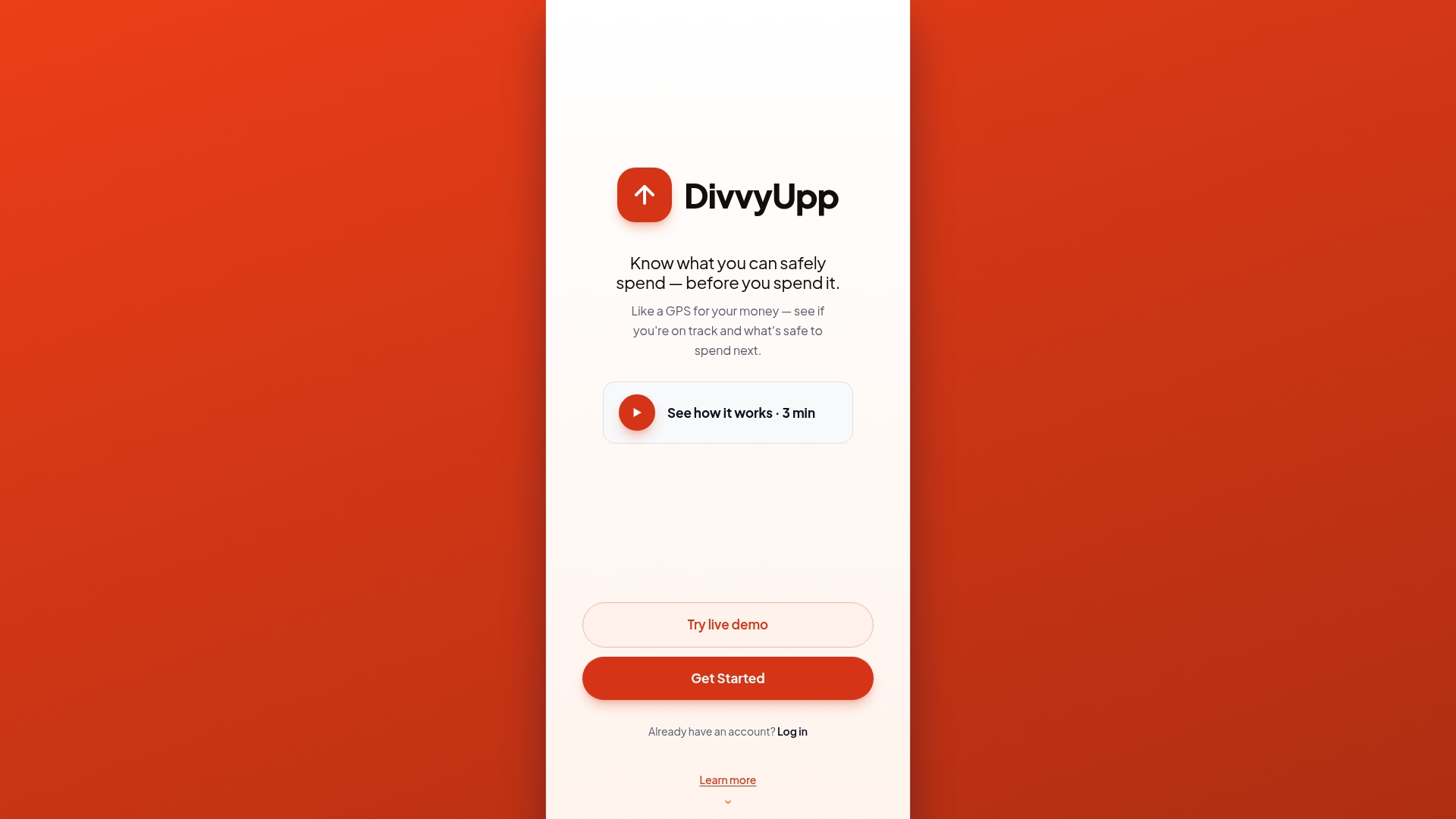
Your money never leaves your own bank. DivvyUpp is non-custodial, meaning it does not move funds or store card numbers. It simply gives you a clear answer when you ask “can I afford this?” The answer is safe, risky, or yes-but-here’s-the-cost. Free to try, no signup required. If you have real financial goals and keep losing the month to flexible spending, that daily number is the missing piece.
General information, not financial advice.
FAQ
What is a spending cycle?
A spending cycle is the recurring period, usually monthly, during which income arrives and gets allocated to expenses, savings, and debt. Managing it well means assigning every dollar a job before spending begins.
Why do high earners still live paycheck to paycheck?
62% of Americans live paycheck to paycheck, including many six-figure earners, because the problem is unallocated spending, not income level. Lifestyle creep and reactive money management keep the pattern alive regardless of salary.
What are the main types of household spending categories?
The three core types are fixed expenses (rent, insurance), variable expenses (groceries, dining), and periodic expenses (annual fees, gifts). The Bureau of Labor Statistics tracks 14 major categories across these types.
How often should I review my spending cycle?
A monthly review is the minimum. Checking category totals weekly and setting alerts at 75% of each variable budget gives you time to adjust before the month ends rather than after.
What is zero-based budgeting?
Zero-based budgeting means assigning every dollar of income to a specific category so that income minus all assignments equals zero. No floating money remains, which removes the trigger for unconscious overspending.