
TL;DR:
The best household budget tracking method is the one you use consistently, not the most complex.
Five popular methods include the 50/30/20 rule, zero-based budgeting, the envelope system, pay-yourself-first, and spreadsheet tracking.
Household budget tracking methods are the systems you use to record, categorize, and control where your money goes each month. The best method is not the most sophisticated one. It is the one you will actually use consistently, according to Fidelity’s budgeting guidance. Five proven frameworks cover most households: the 50/30/20 rule, zero-based budgeting, the envelope system, pay-yourself-first, and spreadsheet tracking. Each offers a different trade-off between control, effort, and automation. Choosing the right one depends on your personality, income pattern, and financial goals.
1. What are the best household budget tracking methods?
The five methods below represent the most widely used personal finance frameworks. Each one solves a different problem, so the right fit depends on what is causing your money stress right now.
-
50/30/20 rule: Simple percentage splits for needs, wants, and savings
-
Zero-based budgeting: Every dollar gets a job until the balance hits zero
-
Envelope system: Cash or digital buckets limit spending by category
-
Pay-yourself-first: Savings come out automatically before you spend anything
-
Spreadsheet tracking: A DIY log in Google Sheets or Excel for full control
Professionals recommend a six-step budgeting process that includes identifying income, tracking expenses, planning for irregular costs, selecting a method, building the system, and reviewing it monthly. That structure applies to every method below.
2. The 50/30/20 rule: the best starting point for beginners

The 50/30/20 rule is the most widely recommended framework for people new to monthly expense tracking. It splits your after-tax income into three buckets: 50% for needs, 30% for wants, and 20% for savings and debt repayment, as outlined by Fidelity. That structure removes the need to categorize every single transaction, which is why beginners stick with it longer than more detailed methods.
The needs bucket covers rent or mortgage, utilities, groceries, transportation, and insurance. The wants bucket covers dining out, subscriptions, travel, and entertainment. The savings bucket should include an emergency fund, retirement contributions, and any debt payments beyond the minimum.
Fidelity recommends targeting 15% of pre-tax income for retirement specifically. That number sits inside the 20% savings allocation, so you still have room for debt payoff or a short-term savings goal.
The 50/30/20 rule works best when you automate the savings transfer on payday. Automation removes the daily decision of whether to save, which is the single biggest reason budgets fail.
Pro Tip: Set up an automatic transfer to savings the same day your paycheck lands. You will never miss money you never see in your checking account.
3. How zero-based budgeting works and who benefits from it
Zero-based budgeting assigns every dollar of income to a specific category until income minus all allocations equals zero. That does not mean spending everything. It means every dollar has a named purpose, including savings and investments, as defined by finance professionals. The result is maximum visibility into where your money goes.
The process works in four steps:
-
Write down your total monthly take-home income.
-
List every expense category: fixed bills, variable spending, savings, and debt payments.
-
Assign a dollar amount to each category until the total matches your income.
-
Track actual spending against each category throughout the month and adjust as needed.
Zero-based budgeting is the most effective method for paying down debt fast. When you assign every dollar deliberately, you find money hiding in vague categories like “miscellaneous” or “dining out” that you can redirect to debt. The trade-off is time. This method requires more active tracking than the 50/30/20 rule.
Zero-based budgeting suits people who want tight control and find detailed tracking satisfying rather than exhausting. If you dislike spreadsheets or tracking apps, this method will feel like a chore within two weeks.
Pro Tip: Schedule a 15-minute monthly review to reset your zero-based budget. Income changes, expenses shift, and a budget that worked in january may not fit in april.
4. Using the envelope system to stop overspending by category
The envelope system is the most concrete of all household financial management approaches. You divide your spending money into separate envelopes, one per category, and stop spending in that category when the envelope is empty. Traditionally this used physical cash, but digital versions now replicate the same constraint inside an app or a spreadsheet.
The categories most households track with envelopes include:
-
Groceries
-
Dining and takeout
-
Entertainment and hobbies
-
Clothing and personal care
-
Gas and transportation
The power of the envelope system is that it makes limits physical and visible. When the grocery envelope holds $400 and you have spent $380, you know exactly what you have left without doing any math. That immediacy is what builds spending discipline faster than any other method.
The main drawback is friction with online purchases. Paying with a credit card for rewards and then manually deducting from a digital envelope requires discipline that defeats the purpose for some people. The envelope system works best for chronic overspenders who need a hard stop, not a soft warning.
Pro Tip: Start with just two or three envelopes for your biggest problem categories. Tracking everything at once is the fastest way to abandon the system entirely.
5. Pay-yourself-first budgeting for effortless savings
Pay-yourself-first is the lowest-effort method for building savings. The rule is simple: transfer a fixed amount to savings the moment your paycheck arrives, then spend whatever remains without guilt or detailed tracking. Automation removes budget decision fatigue and makes this method sustainable for people who dislike manual tracking.
The method works best when you:
-
Automate the savings transfer to a separate account on payday
-
Set the transfer amount based on your actual savings goal, not a round number
-
Treat the remaining balance as your true spending money for the month
-
Review the transfer amount quarterly as your income or goals change
Pay-yourself-first does not control how you spend the money that remains. If overspending on dining or subscriptions is your core problem, this method will not fix it. You will save consistently, but you may still run short before the next paycheck. Pair it with a simple spending log if you need more visibility into where the remainder goes.
This method is ideal for high earners who already cover their bills but struggle to save consistently. The problem for that group is usually not income. It is that spending expands to fill whatever is available.
6. Building a DIY household budget tracker with spreadsheets
A spreadsheet tracker in Google Sheets or Excel gives you full control over your data without sharing bank access with any third party. Setup takes 30–45 minutes, and daily maintenance runs under two minutes if you log transactions immediately rather than batching them at the end of the week.
A simple one-tab structure is the right starting point, as recommended by tracker designers. Start with three columns: date, description, and amount. Add a category column once the daily logging habit is solid. Complexity added too early is the most common reason people abandon DIY trackers.
| Tab | What to track | Time to update |
|---|---|---|
| Income log | All income sources and dates | 1 minute on payday |
| Expense log | Every transaction by category | Under 2 minutes daily |
| Monthly summary | Totals by category vs. budget | 5 minutes at month end |
Immediate transaction logging beats batching every time. When you wait until Sunday to enter a week of receipts, the task feels large and you start skipping it. When you log each purchase in under 30 seconds, the habit sticks.
Pro Tip: Keep your spreadsheet open as a browser tab on your phone’s home screen. The lower the friction to open it, the more likely you are to log immediately.
Key takeaways
The most effective household budget tracking method is the one you will use every month without forcing yourself, not the one with the most features or categories.
| Point | Details |
|---|---|
| Match method to personality | Detail-oriented people thrive with zero-based budgeting; low-effort seekers do better with pay-yourself-first. |
| Automate savings first | Transferring savings on payday removes willpower from the equation and builds the habit automatically. |
| Plan for irregular expenses | Sinking funds for annual costs like insurance and taxes prevent the budget failures most beginners experience. |
| Start simple with spreadsheets | One tab for income and one for expenses beats a complex system you abandon after two weeks. |
| Review monthly | A scheduled monthly review keeps your budget accurate as income and priorities shift. |
What I have learned from building budgets that actually last
By Srini, Founder @ DivvyUpp
The biggest mistake I see is people choosing a budget method based on what sounds most responsible rather than what fits how they actually live. Zero-based budgeting looks impressive on paper. But if you hate tracking, you will quit by week three and feel worse about money than before you started.
I built DivvyUpp because I kept losing the month to small, flexible spending. My income was fine. My savings transfers were automated. But I had no idea whether I could afford a $90 dinner on a Wednesday without blowing the rest of the month. No method I tried answered that question in real time.
The insight that changed everything for me was separating savings from spending before I touched anything. Pay-yourself-first solved the savings problem. But it did not solve the daily spending question. That gap is exactly what DivvyUpp fills.
One thing most budgeting guides skip: irregular expenses cause most budget failures. Car registration, annual subscriptions, holiday gifts. They are not surprises. They are predictable costs you forgot to plan for. Sinking funds, where you divide the annual total by 12 and set that amount aside monthly, fix this completely. Add a sinking fund line to whatever method you choose.
My honest advice: start with the 50/30/20 rule for one month. Automate your savings. Log your spending in a simple spreadsheet. Then decide if you need more control or less. Most people need less complexity, not more.
— Srini / Founder @ DivvyUpp
What DivvyUpp adds when a budget alone is not enough
Most budgeting methods tell you where your money went. DivvyUpp tells you what is safe to spend right now, before you make the purchase.
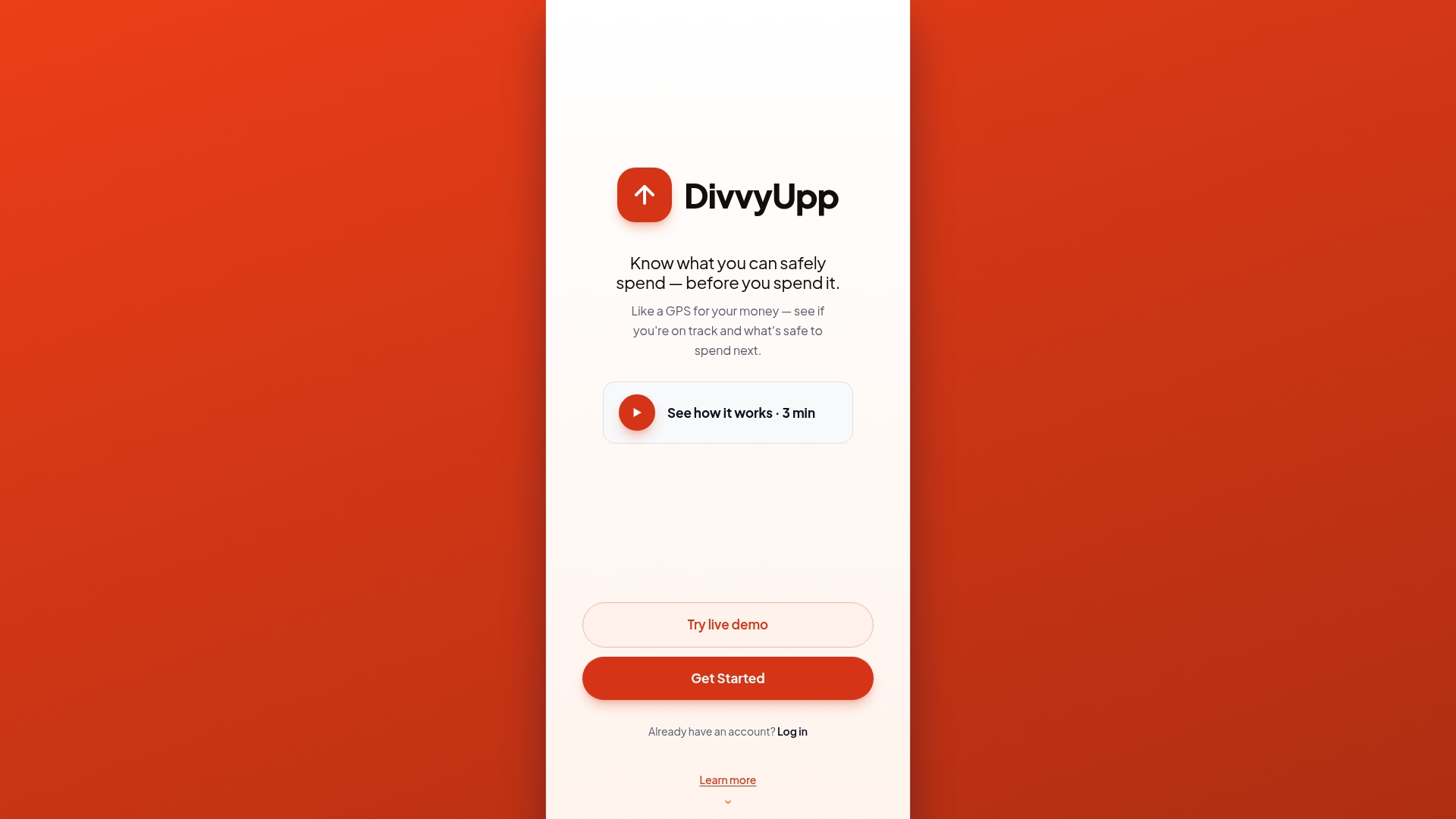
DivvyUpp is a non-custodial personal finance app that gives you a single daily number: what you can safely spend today, this week, and this month based on your real spending rate and the days left in your cycle. It answers “can I afford this?” with a straight answer: safe, risky, or yes-but-here’s-the-cost. Your money never leaves your own bank. DivvyUpp does not move funds or store card numbers. It is built for people who earn well but keep losing the month to flexible spending. Try DivvyUpp free, no signup required.
General information, not financial advice.
FAQ
What is the easiest household budget tracking method for beginners?
The 50/30/20 rule is the easiest starting point. It requires only three spending categories and works well when paired with an automatic savings transfer on payday.
How long does it take to set up a spreadsheet budget tracker?
A basic Google Sheets or Excel tracker takes 30–45 minutes to set up and under two minutes per day to maintain when you log transactions immediately.
Why do most household budgets fail in the first month?
Irregular, non-monthly expenses like insurance, car registration, and annual subscriptions catch beginners off guard. Sinking funds, which spread those costs across 12 months, prevent most early budget failures.
Is zero-based budgeting worth the extra effort?
Zero-based budgeting delivers the most control and accelerates debt payoff, but it requires active daily tracking. It is worth the effort for people who want to know exactly where every dollar goes.
How often should I review my household budget?
A monthly review is the professional standard. Scheduled monthly check-ins keep your budget accurate as your income, expenses, and priorities change over time.